


America 250 Civics Education: Turning a Milestone into a Lasting Classroom Opportunity

America 250 civics education is already inspiring new investments in how students learn about American history, government, and the Constitution. In Indiana, Ball State University recently announced a three-year, $2.7 million initiative to strengthen civic learning statewide. The project is a timely reminder that the nation's 250th anniversary can be more than a date on the calendar: it can prompt lasting learning, meaningful classroom resources, and stronger connections between founding documents and students' lives.
What America 250 Civics Education Can Look Like
Ball State's FORGE initiative, short for Foundations of Representative Government and Engagement, brings together educators, future teachers, school leaders, universities, and civic organizations. Its plans include regional civic-learning hubs, professional learning, classroom implementation, and work with primary sources and constitutional principles. The announced effort is designed to reach educators and school leaders directly, while evaluating learning in participating classrooms.
The encouraging idea is not simply to add one anniversary lesson. It is to give educators sustained support and help students encounter civic ideas through history, geography, government, and the words of the founding documents. That approach reflects an important truth: civic learning grows when students have opportunities to read, question, discuss, and connect ideas to the communities around them.
Why America 250 Civics Education Should Last Beyond 2026
A national anniversary creates a natural opening for curiosity. Students may ask why the Constitution was written, how its structure shapes government, or what citizenship asks of people today. Those questions are valuable well after the celebrations end. America 250 can help schools begin conversations that continue into the next school year and beyond.
The Constitution is not only a historic artifact. It establishes the framework of our government and remains part of the civic life students are preparing to enter. Encountering the text itself gives young people a concrete starting point for understanding rights, responsibilities, and how the country's institutions work.
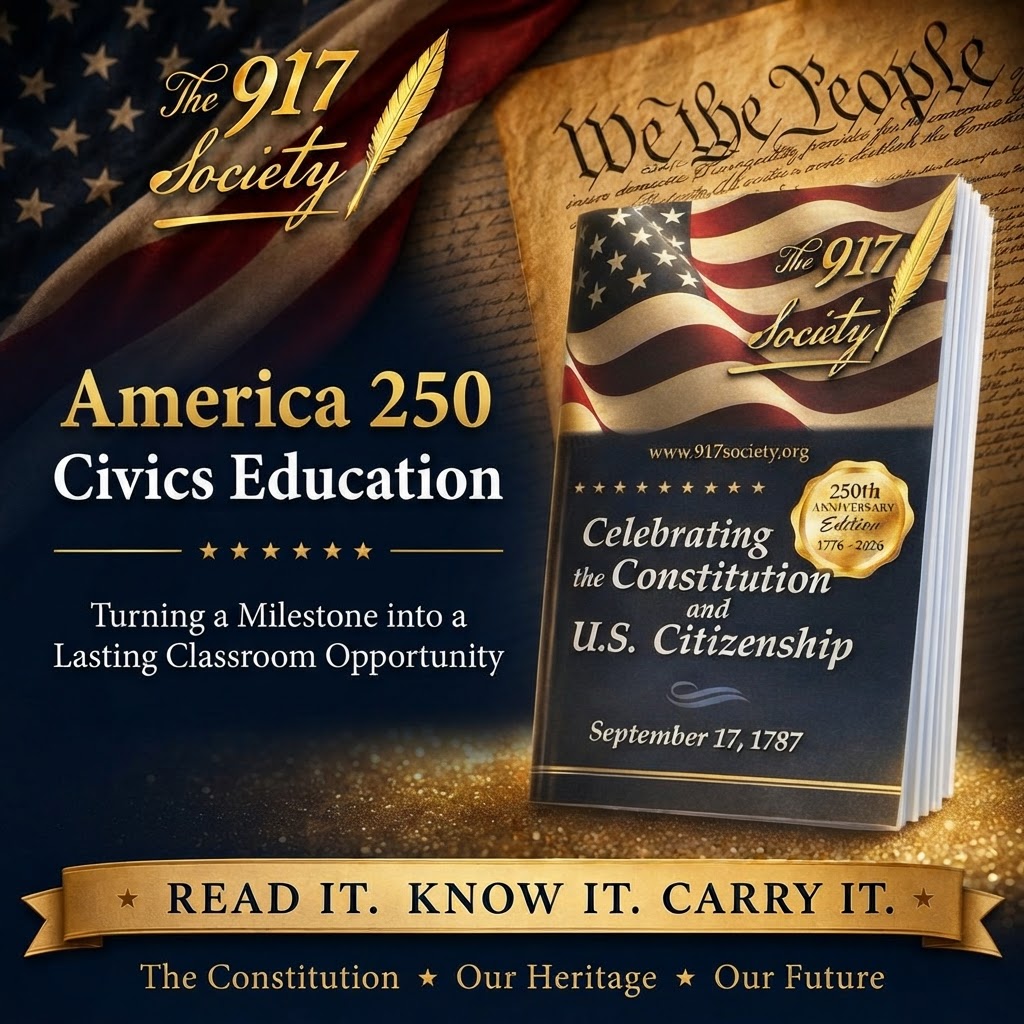
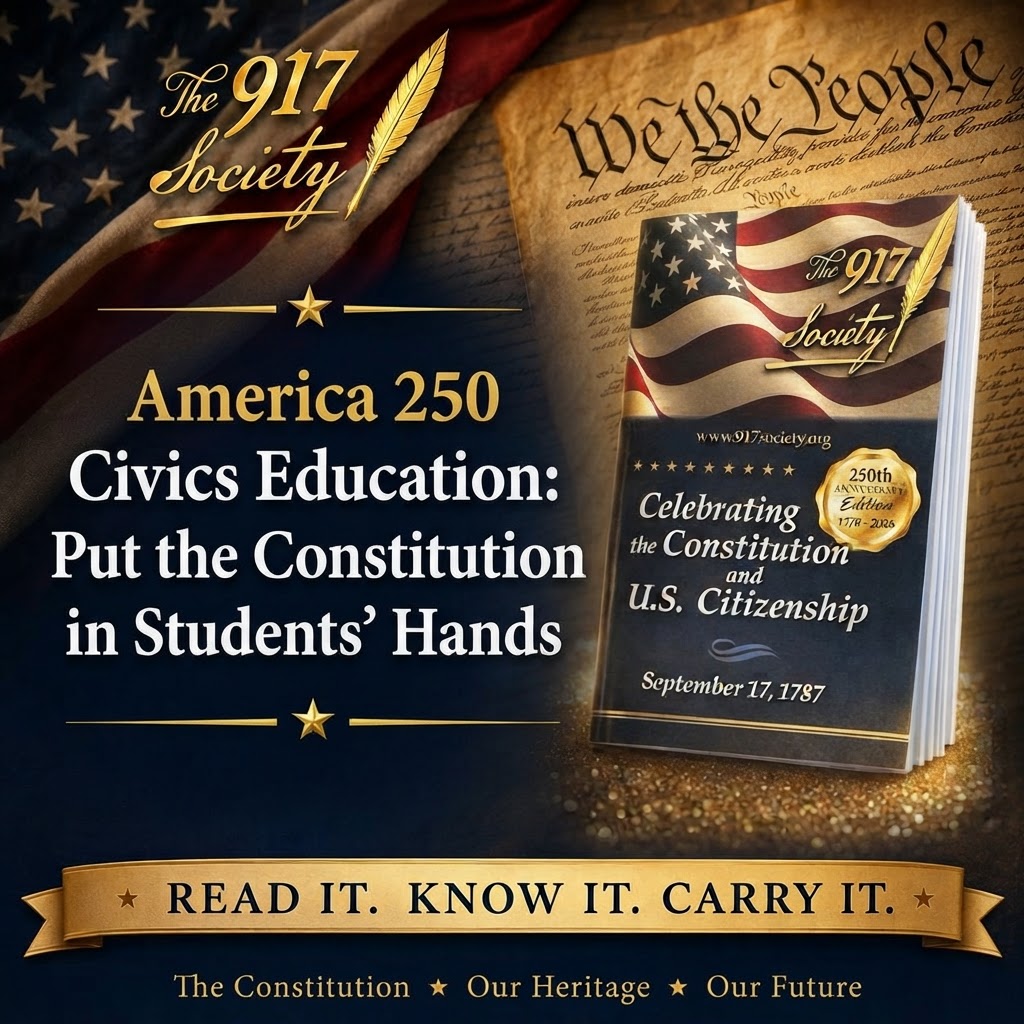
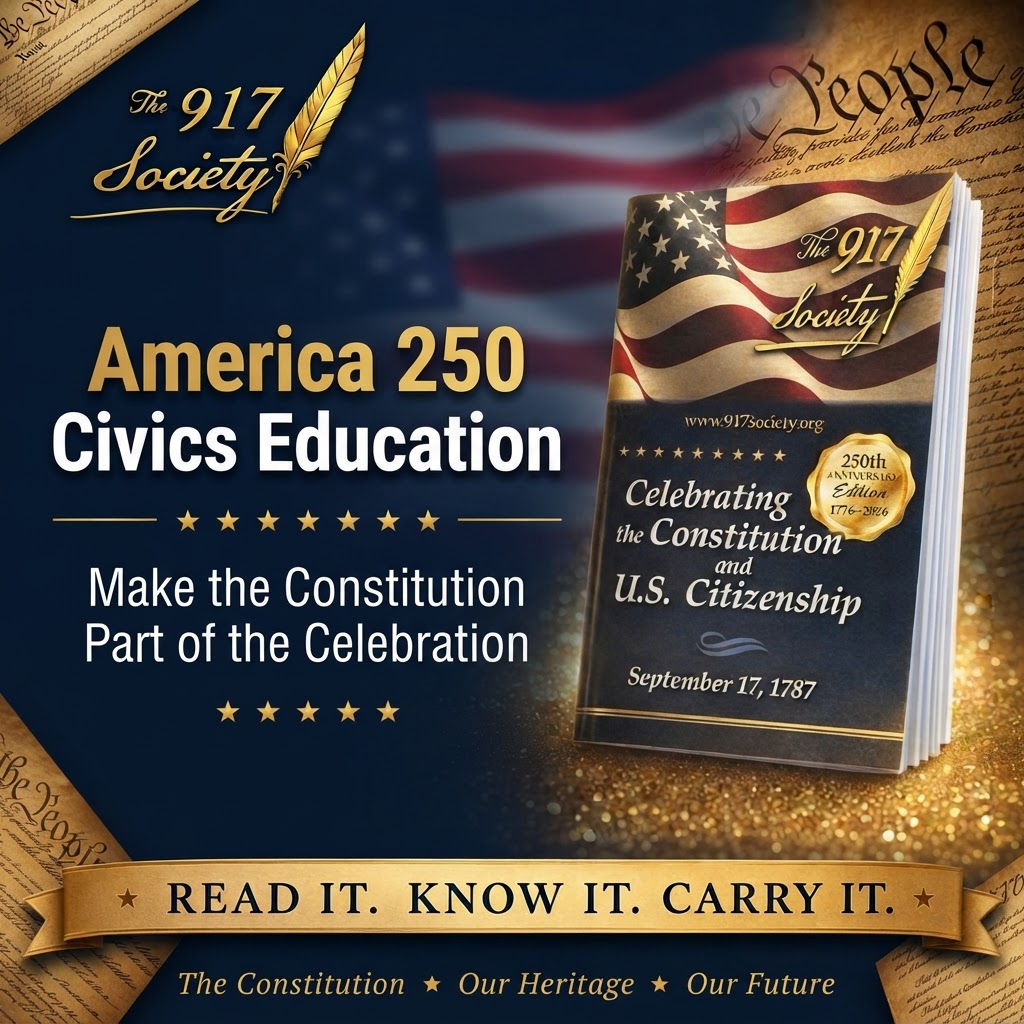
That's why accessible, age-appropriate resources matter. When students can hold and explore a pocket Constitution, a foundational document becomes less abstract. Teachers can use it alongside history, discussion, and classroom activities to invite careful reading and thoughtful questions.
A Practical Next Step for America 250 Civics Education
Large initiatives and local classroom experiences can reinforce each other. Universities and statewide partnerships can strengthen educator networks, while schools can make the Constitution tangible for students in their own communities. Each plays a different role in building civic knowledge that lasts beyond a single anniversary.
The 917 Society's core mission is to provide Constitutions free to 8th graders. Teachers and schools can request free 8th grade Constitutions through the website. Learn more about the free Constitution program for 8th graders and the 917 Society.
America's 250th anniversary offers a reason to look back, but its greatest classroom value may be what students carry forward: a clearer understanding of the document, the institutions it established, and their place in civic life. If your school is planning for the year ahead, request free Constitutions for your 8th-grade classroom.
Comments