


America 250 Civics Education: Make the Constitution Part of the Celebration

The conversation around america 250 civics education is growing as the United States approaches the 250th anniversary of the Declaration of Independence. Recent coverage of the National Civics Bee championship, where students from across the country competed, is a timely reminder: an anniversary can be more than a date on the calendar. It can invite people to learn how our system of government works and why its founding documents still matter.
For schools, families, and communities, the Constitution offers a practical place to begin. It is not only a historic artifact. It describes the structure of the federal government, divides power, and sets out principles that generations of Americans have debated, interpreted, and worked to fulfill.
Why America 250 civics education matters
A milestone year naturally brings attention to the country's beginnings. But civic understanding grows when students can connect that history to the institutions and responsibilities they encounter today. What does the Constitution say about the branches of government? Why did the framers divide authority? How can citizens participate in public life?
These questions can lead to thoughtful classroom discussions without requiring students to agree on every answer. Reading the text together gives learners a shared starting point. They can examine the words, ask what a provision means, and consider how constitutional ideas have been applied over time.
Make the Constitution tangible in the America 250 classroom
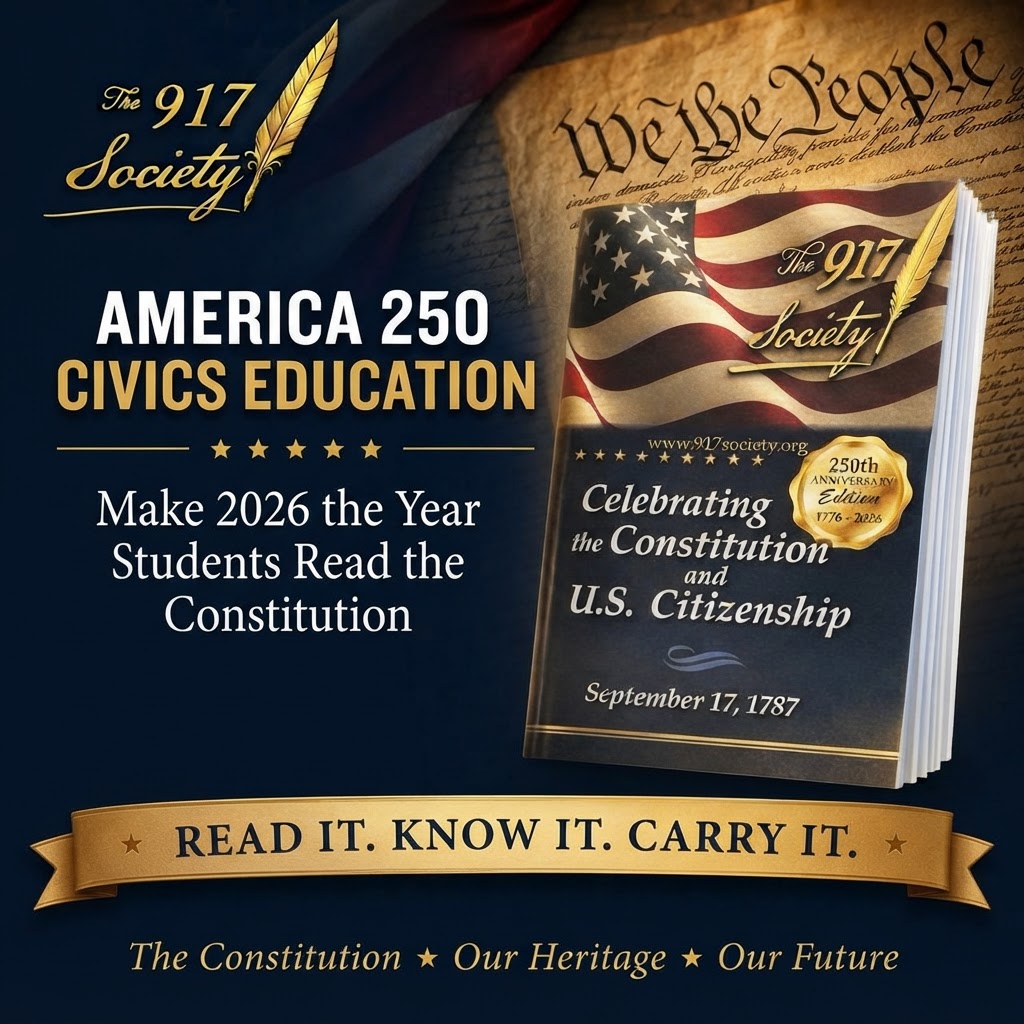
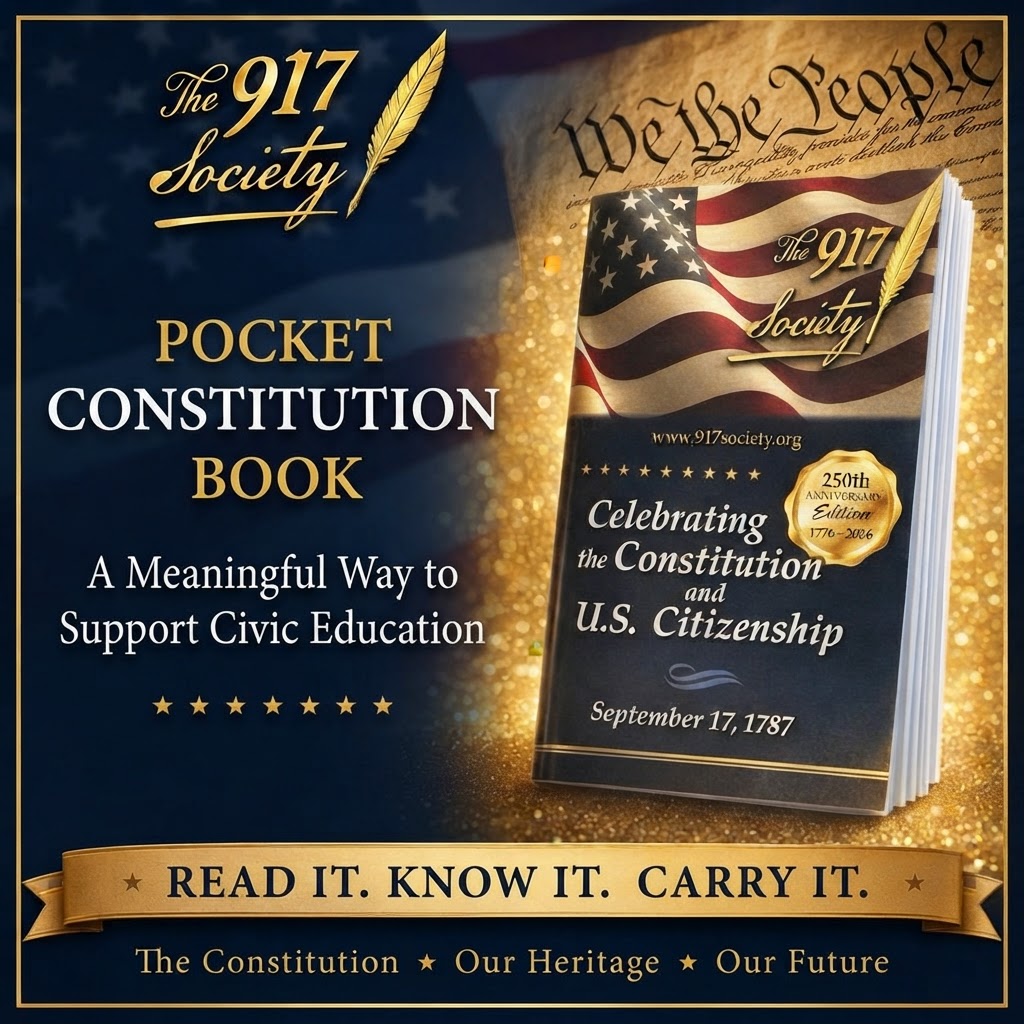
A pocket-sized copy can make a primary source feel approachable. Instead of encountering the Constitution only in a textbook excerpt or on a screen, students can keep the document in hand and return to it as questions arise. Teachers can invite students to locate a section, explain it in their own words, and connect it to a broader lesson in American history or government.
The anniversary also creates room for activities that are engaging and grounded in evidence: compare the Constitution's opening goals with the structure of its articles, map the three branches, or have small groups explain how checks and balances work. The goal is not to turn a complex document into a slogan. It is to help students build familiarity with the text and confidence asking informed questions.
America 250 civics education starts with access
Access matters. The 917 Society's core mission is to provide Constitutions free to 8th graders. Schools and teachers seeking free copies for 8th-grade students can request Constitutions through the school order form. The program is designed to put a copy directly into students' hands as they study American history and civics.
The anniversary is a useful prompt, but civic learning should not end when the celebrations do. A Constitution students can revisit helps keep the conversation going: in class, at home, and as young people learn how to take part in their communities.
As America marks 250 years, we can honor the milestone by helping the next generation engage with the document that established our national framework. Start by learning more about free Constitutions for 8th graders and the 917 Society's work at 917society.org.

Comments