


America 250 Civics Education: Make the Constitution Part of the Celebration

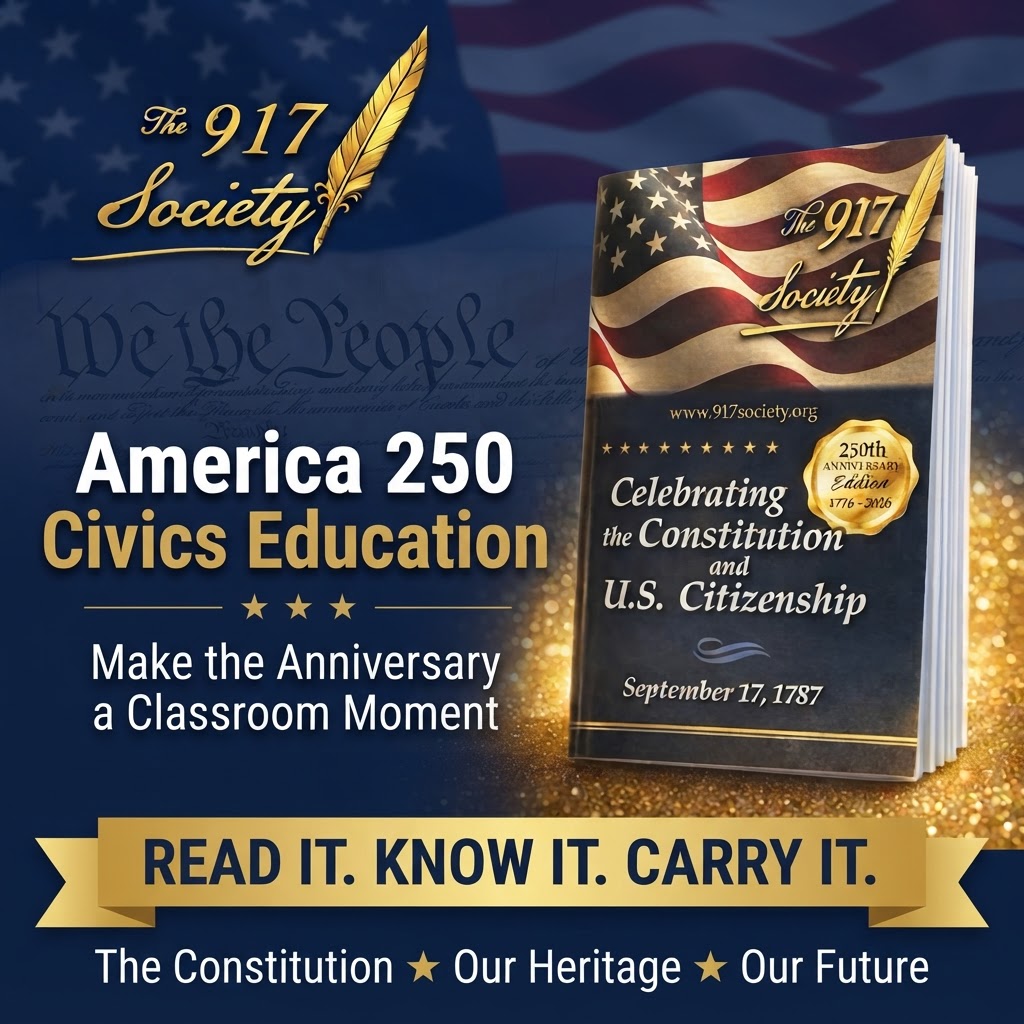
America 250 civics education is about more than commemorating a milestone. As the United States celebrates its 250th anniversary, communities are looking for ways to make the founding era meaningful to the next generation. The most lasting celebration may be a simple one: help students read the Constitution, understand its ideas, and see how those ideas shape everyday life.
Recent national attention around student civics competitions, including the 2026 National Civics Bee, is a timely reminder that young people can engage seriously with civic questions. A contest can spark curiosity. A primary source, read and discussed in the classroom, gives that curiosity somewhere to go.
Why America 250 civics education starts with the Constitution
The Declaration of Independence announced a revolutionary principle: government exists to secure rights and derives its just powers from the consent of the governed. The Constitution then established the framework for a government intended to put those principles into practice. Students who encounter both documents gain more than dates and vocabulary. They can ask how power is divided, why rights are protected, and how citizens participate in the system.
That kind of learning is especially valuable in eighth grade, when students are ready to connect historical ideas to the institutions they see around them. A pocket Constitution can make the text approachable and tangible. Students can return to it during class discussions, lessons on the branches of government, and conversations about rights and responsibilities.
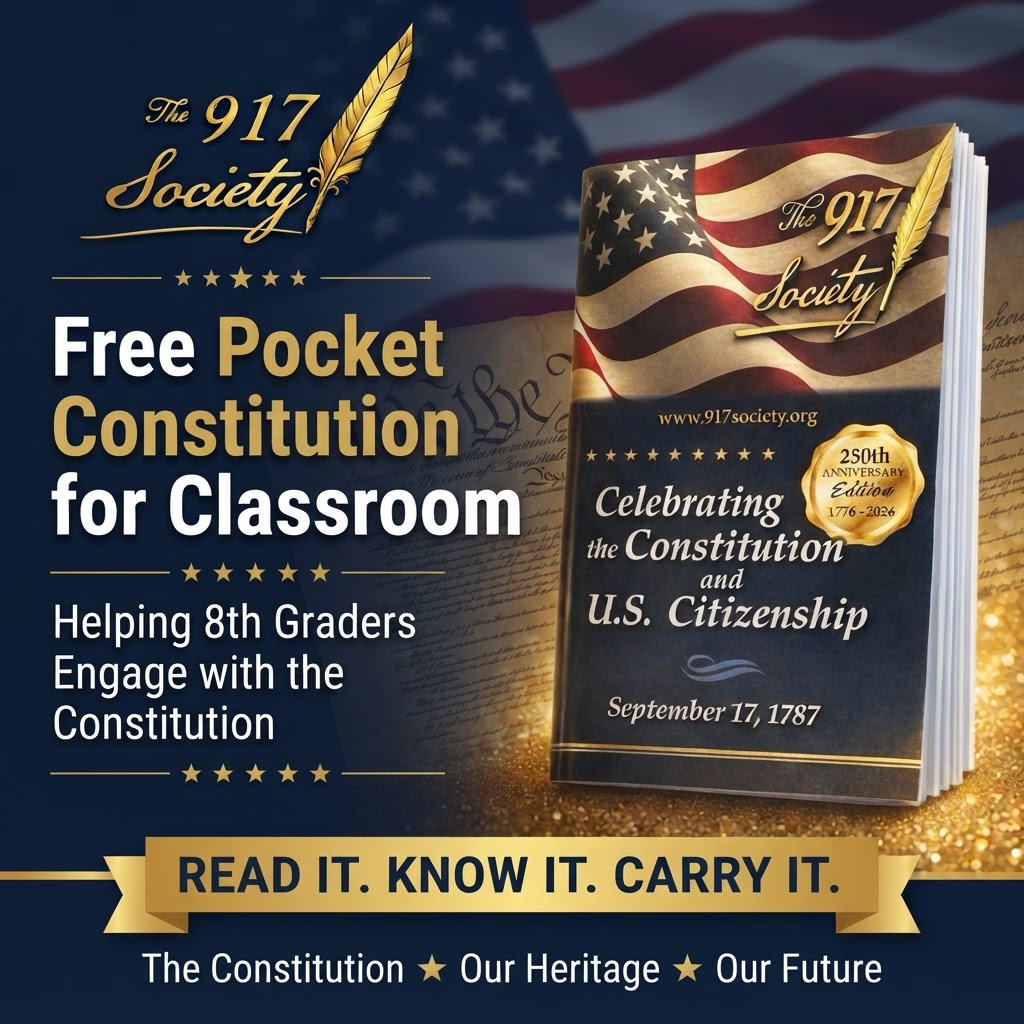
The 917 Society's core mission is to provide Constitutions free to eighth graders. Teachers and schools can request free 8th grade Constitutions through the website. The goal is straightforward: put the founding document directly into students' hands, without asking families or classrooms to pay for the core program.
Make the America 250 civics education moment last
Anniversaries are powerful because they bring people together around a shared story. But a celebration becomes education when students get to ask questions and work with original sources. What problem were the framers trying to solve? How does the Constitution limit government power? What does it mean for citizens to take part in self-government?
A teacher does not need an elaborate production to begin. A short, regular reading can anchor a class routine. Invite students to identify a phrase they recognize, a question they have, or a connection to a current lesson. Pairing a brief excerpt with discussion helps the document feel less distant and more like a living framework students can examine for themselves.
America 250 can also be an invitation for families and communities to learn together. Supporters who want a personal copy can purchase the book to help fund free classroom distributions. The message matters: public purchases support the mission of getting Constitutions into eighth-grade classrooms at no cost to students.
For schools, the route is different. Eighth-grade classrooms should use the website request form, not retail shopping links. High schools and colleges may contact the organization about copies available at cost; requests for other K-12 grades are handled by request, subject to availability, with a small donation requested.
A 250th anniversary with a classroom legacy
The 250th anniversary will pass. What students learn from it can last much longer. When a young person reads the Constitution and begins to understand how its structure works, America 250 becomes more than a commemorative year. It becomes an opportunity to build civic knowledge that students can carry forward.
The 917 Society is helping make that opportunity practical by distributing free Constitutions to eighth graders. Learn more at 917society.org. Educators can request Constitutions for their 8th-grade classrooms, and supporters can help sustain the mission.

Comments