


America 250 Civics Education: Make the Anniversary a Classroom Moment

As the United States approaches its 250th anniversary, America 250 civics education is drawing fresh attention. On October 19, 2026, the Texas Public Policy Foundation and Goldwater Institute hosted a discussion about restoring civics education, including the importance of teaching the Declaration of Independence and other foundational documents. The timing is a reminder that the anniversary can be more than a celebration. It can be an invitation to understand the ideas that shaped the country.
For teachers, parents, and communities, the big question is practical: how can we help young people connect a historic document to the responsibilities of citizenship today? The answer starts with giving students a chance to read, ask questions, and see themselves as part of the continuing American story.
Why America 250 civics education matters
An anniversary gives classrooms a natural opening to explore the country's founding. Students can examine what the Constitution says, how its structure divides and limits government power, and how the principles in founding documents continue to shape public life. That learning is not about asking students to agree on every political question. It is about giving them the civic knowledge to understand the system and participate thoughtfully.
The need for engaging civics learning is also visible in student achievement. In October, the U.S. Chamber of Commerce Foundation announced that Peter Daniell, a middle school student from Broomfield, Colorado, won the 2026 National Civics Bee Championship. The competition invites middle school students to develop ideas for improving their communities through civic action. It is an encouraging example of students treating civics not as a distant subject, but as a way to understand and contribute to the places where they live.
Bring America 250 civics education into the classroom
A strong anniversary lesson does not need to be complicated. Start with a short passage from the Constitution or another founding document. Ask students what problem the passage addresses, what principle it expresses, and where they can see that principle at work in civic life. Invite them to compare their interpretations and support their ideas with the text.
Teachers can also connect the lesson to local community questions. Have students identify an issue they care about, learn which level of government addresses it, and consider respectful ways citizens can take part. That process helps students see the link between constitutional structure and everyday civic responsibility.
The 250th anniversary is a useful moment to make space for these conversations, but civic learning should continue beyond one celebration. Students benefit when they encounter primary sources, discuss them thoughtfully, and learn how participation works over time.
Make the founding documents tangible
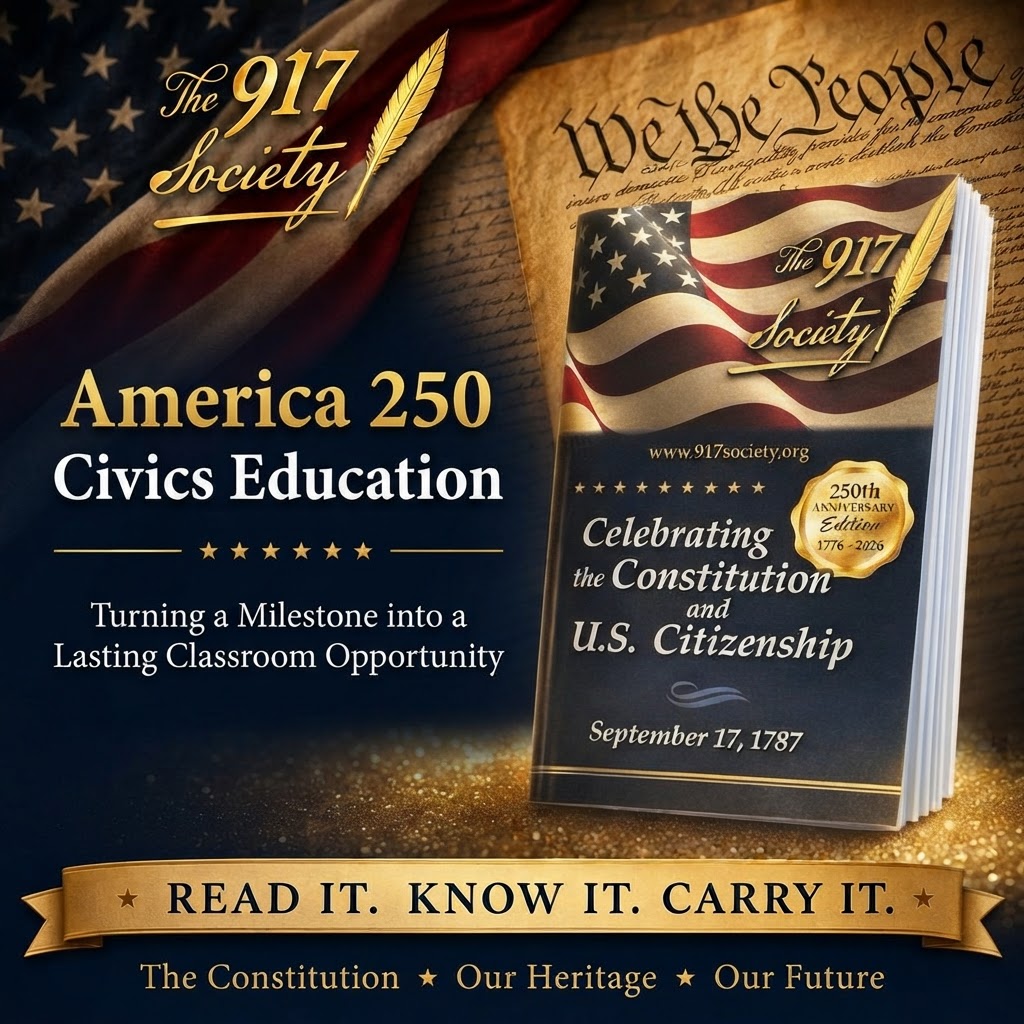
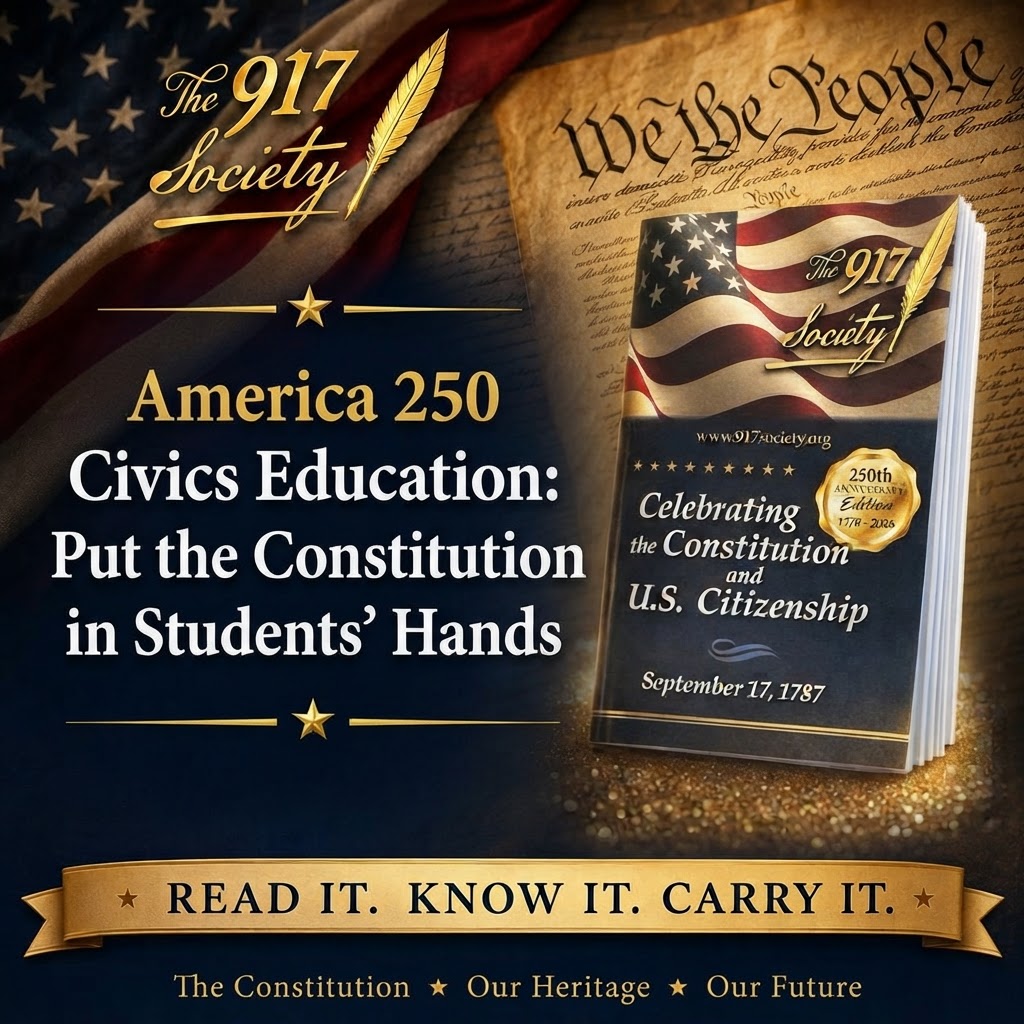
For younger students, a pocket Constitution can make the text feel accessible and personal. The 917 Society provides free Constitutions to 8th graders as part of its mission to strengthen civic literacy. Schools seeking free 8th grade Constitutions can request them through the school order form. Educators can also learn about the 8th grade program and find more information at 917society.org.
America 250 is an opportunity to renew attention to the documents and civic ideas that bind generations together. A classroom conversation, a close reading of the Constitution, or a student's community-improvement idea can turn a national milestone into lasting learning.
For the 917 Society, that work begins by putting the Constitution directly into the hands of 8th graders, free of charge. Schools can request free 8th grade Constitutions and help students carry the founding document into their civic future.
Comments