


America 250 Civics Education: A Timely Moment to Strengthen Constitutional Learning

America 250 civics education is more than a commemoration. As the nation approaches its 250th anniversary, a newly introduced bipartisan bill is bringing renewed attention to a practical question: how can students and teachers build a stronger understanding of American government and constitutional democracy?
On October 14, U.S. Senators Chris Coons and John Cornyn introduced the Strengthening Civics Education Act. The proposal would support civics and history learning, expand teacher opportunities, encourage open educational resources, strengthen national assessments, and create an America250 civics clearinghouse for federal scholarships and fellowships. The bill also says it would preserve state and local control over instruction. It is a proposal, not enacted law, but it offers a useful opening for a larger conversation about civic learning.
Why America 250 civics education belongs in the classroom
A 250th anniversary can be more than a date on a calendar. It can give students a reason to ask how the Constitution was written, what its principles mean, and how citizens participate in a representative democracy. Those questions connect history to everyday civic life.
The case for that learning is urgent. The reporting on the legislation notes that the most recent national assessment found eighth-grade civics scores declined in 2022 after years of stagnation. It also describes uneven access to civics instruction and a need for stronger support for teachers. A commemoration cannot solve those challenges by itself, but it can help communities focus attention on them and make constitutional learning visible throughout the year.
For students, the Constitution is not simply a historic document to memorize. It is a framework for understanding how government is organized, how power is limited, and how citizens can take part. Reading its words alongside the historical context helps turn abstract ideas into questions students can discuss and carry forward.
How America 250 civics education can become lasting learning
The proposed legislation highlights several approaches that communities can consider: teacher development, high-quality open educational resources, and reliable ways to understand student learning. Each points to a broader lesson. Strong civic education depends not only on materials, but also on prepared educators and sustained opportunities to engage with American history and government.
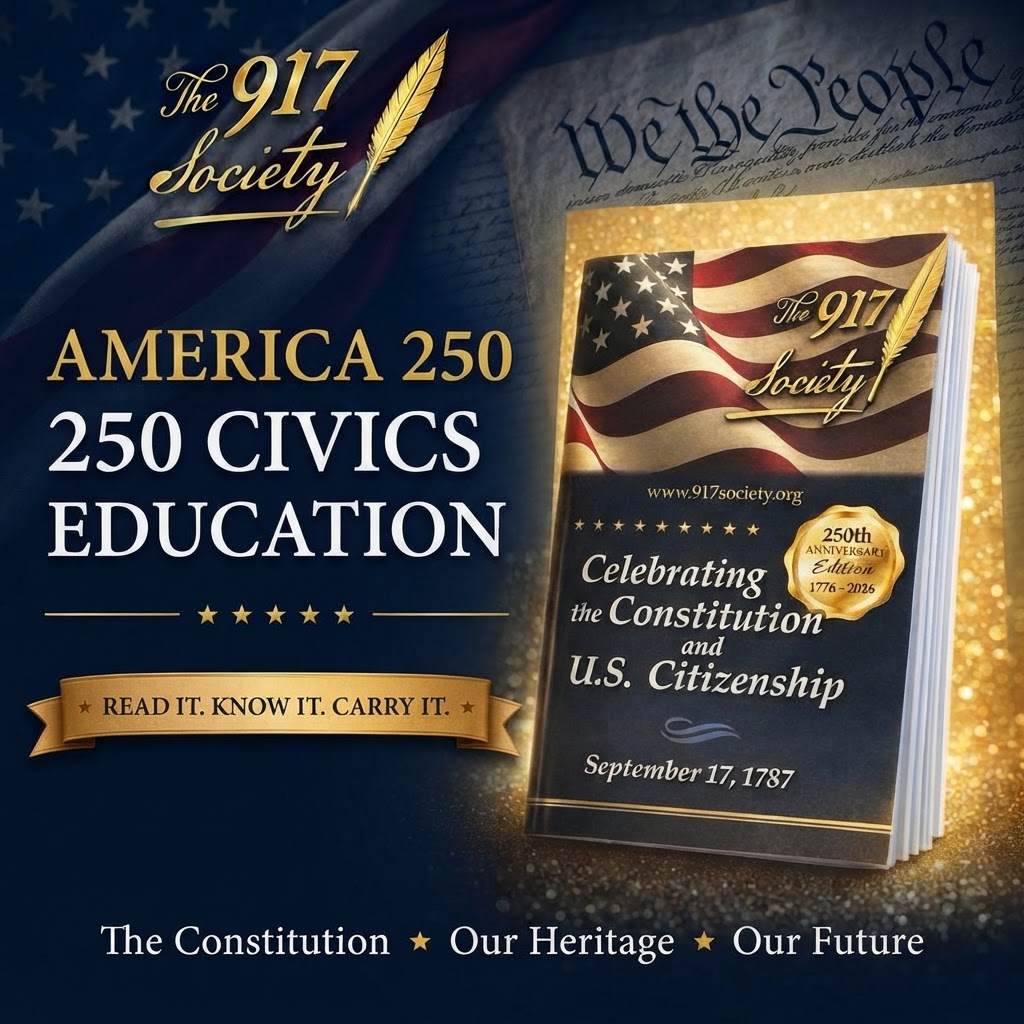
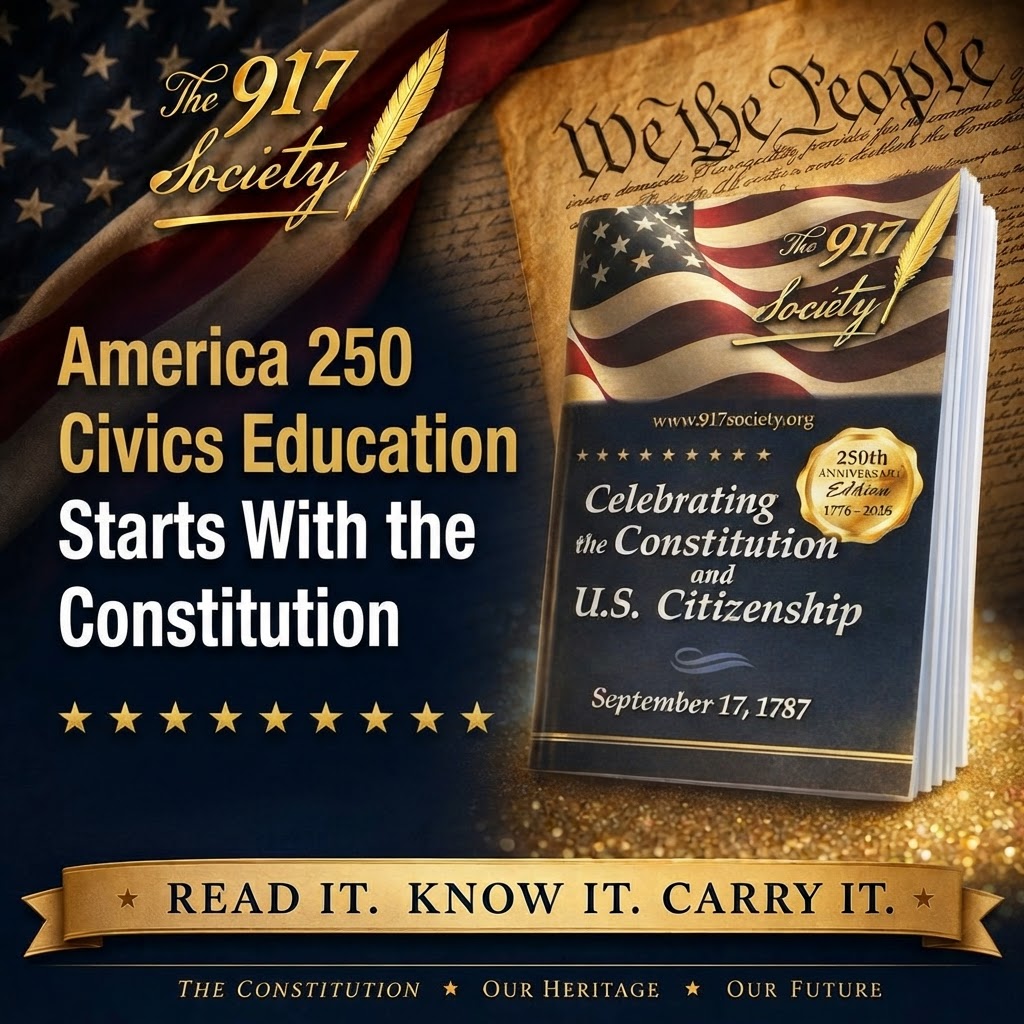
Schools and families do not need to wait for a new law to begin. Constitution Day, classroom discussions, local history projects, and thoughtful conversations about representative government can help students connect founding principles with civic responsibilities. The 917 Society supports that work by providing pocket Constitutions free to eighth graders and civic literacy resources for students and educators.
A pocket Constitution gives students a tangible starting point. They can follow the text, return to it as questions arise, and see the document as something to read and interpret rather than an artifact kept at a distance. That small act of placing the text in students' hands can support a larger habit: engaging with the ideas and institutions that shape our shared civic life.
Make the America 250 moment count
America's 250th anniversary invites reflection, but it also asks what we want the next generation to understand. Students deserve opportunities to learn how constitutional democracy works, how rights and responsibilities fit together, and how citizens can contribute to their communities. Those lessons matter beyond one anniversary year.
The Strengthening Civics Education Act is one current proposal in a wider national conversation. Whatever its path, the attention it brings to civics and history is a reminder to invest in learning now. To help put a Constitution in the hands of eighth graders, request free Constitutions for your school. To learn more about the mission and its civic literacy work, learn more at 917society.org →.

Comments